Automated Isn't Free. It's Unpriced.
The emailer sends requests. The spreadsheet tracks names. It looks automated because nobody prints letters or addresses envelopes. Then a counterparty says it never received the request. Now IT checks mail logs. Operations searches an inbox. Someone compares the spreadsheet against sent items. Compliance wants to know whether the request went to the right recipient, whether it arrived, and if there is a record that will stand up to review. The sending was automated. Everything around the sending was not.
A mail merge and a spreadsheet replace one task: generating and sending a message. They do not replace delivery assurance, response tracking, exception handling, controlled access, records retention, or the audit trail. Those jobs still happen. They move to IT, operations, compliance, information security, and legal. Their cost is rarely charged back to the workflow that created it. The cost does not disappear. It gets hidden.
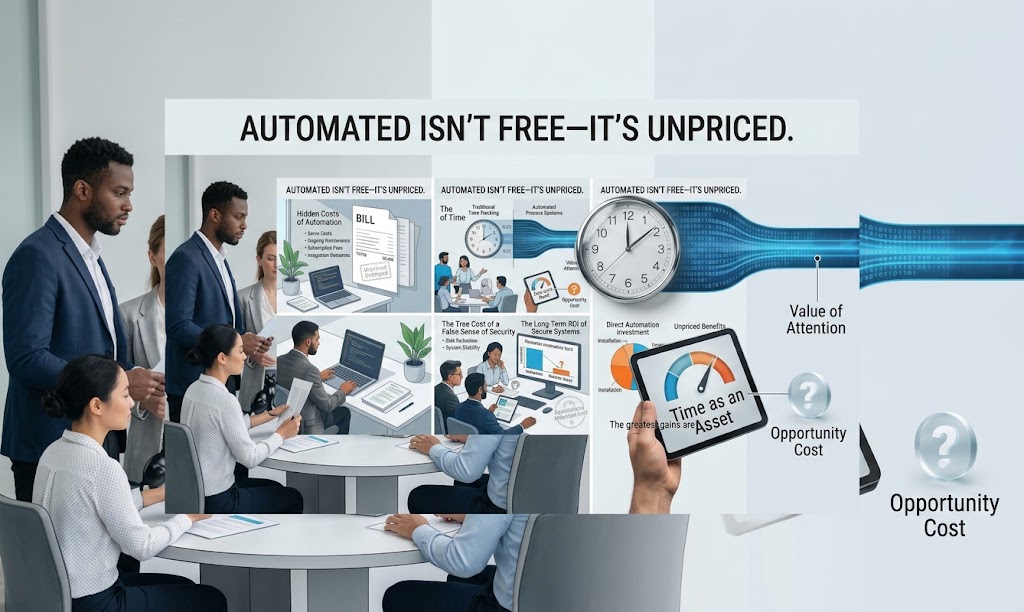
Automated Isn't Free. It's Unpriced. Motion-graphic explainer, 2:36, captioned.
The missing-message test
To find the real cost of a do-it-yourself verification, ask one thing: what happens when a counterparty says it never got the request?
For many firms, the answer starts with an IT ticket. Someone searches mail-server or relay logs, checks bounce messages and spam filtering, confirms sender reputation, and verifies the counterparty contact. Operations resends the request. The counterparty's IT team may get involved. Meanwhile, the verification itself waits. None of that work appears in the business group's automation budget; all of it is a direct cost of using ordinary email as the delivery mechanism for a time-sensitive compliance workflow.
Where the work goes
The cost is scattered across departments, which is why nobody sees the total. IT maintains the mail infrastructure, runs delivery investigations, supports the tool, manages security controls, and fixes the process when it breaks. Operations builds and cleans the spreadsheet, maintains counterparty contacts, checks data before sending, watches for replies, matches responses to requests, chases non-responders, and reports status to management.
Compliance and audit carry the cost of proving the process happened. They have to show what was sent, to whom, when, what came back, who reviewed it, how exceptions were handled, and where the record was retained. A spreadsheet and a mailbox hold pieces of that story. Together they do not produce one controlled record.
The audit trail is the expensive part
The most expensive work usually starts when someone asks for evidence. An examiner does not want a description of the normal process. They want the request, the recipient, the delivery history, the response, the review, the exception record, and the retained evidence. With email and spreadsheets, the firm reconstructs that answer by hand.
The firm's staff search sent mail, locate attachments, and compare spreadsheet versions. They figure out which reply belongs to which request and explain why a record is incomplete or why a response was late. That isn't an automated process; it is an after-the-fact investigation.
Freefunds Verified Direct (FVD) replaces the manual Letter of Free Funds process with secure digital verification between carrying and depositing brokers. It adds real-time status tracking, automated response matching, exception handling, and a complete timestamped audit trail. The point isn't to send requests faster. It is to make the whole workflow visible, controlled, and defensible.
Security is part of the cost
General email wasn't built as a system of record for sensitive verification workflows. The firm still has to manage the data sent through email, access to shared spreadsheets, misdirected messages, phishing risk, and security reviews for every tool involved. A counterparty that receives an unexpected request by email may have no easy way to confirm it is legitimate.
Those risks add work for the information-security team and increase the chance that a routine process problem becomes a data incident. FVD handles this with encrypted digital verification in a controlled workflow, rather than using the mailbox as the workflow itself.
It gets more expensive as the firm grows
At very low volume, with just a handful of counterparties and light audit demands, a do-it-yourself approach can work. The economics shift as volume grows and regulatory scrutiny increases. Each new counterparty adds a contact record, a delivery path, a response format, and a follow-up obligation. As the firm scales, it adds spreadsheet maintenance, inbox monitoring, matching, and chasing.
A managed workflow standardizes the request, tracks responses, flags exceptions, and ties the evidence together from start to finish. When volume rises, the firm doesn't add headcount; it adds capacity.
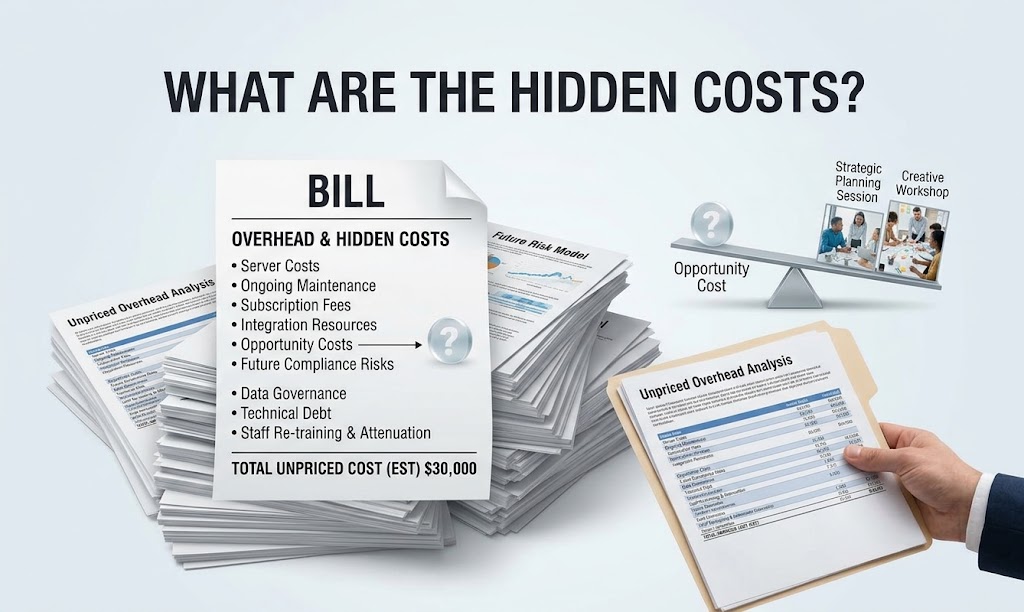
The hidden cost, illustrated
The numbers below illustrate the point. They assume a loaded staff cost of $75 per hour.
| Cost area | Annual estimate |
|---|---|
| Operations: 20 hours per month | $18,000 |
| IT: 6 hours per month | $5,400 |
| Audit preparation: 2 audits at 24 hours each | $3,600 |
| Delivery incidents: 4 at 8 hours each | $2,400 |
| Infrastructure and licensing | $3,000 |
| Estimated annual cost | $32,400 |
The exact number varies by firm. Most firms never calculate it. They price the emailer but leave out the delivery failures, IT investigations, exception work, security reviews, and audit reconstruction that come with it. Automated isn't free if delivery, tracking, security, or evidence work still exists elsewhere. It is unpriced.
Where to start
If your free credit balance verification runs on an automated emailer and a spreadsheet, start by pricing the work that surrounds it. Contact Loffa Interactive Group to walk through where those hours go today, strengthen the evidence trail, and move the workflow into a secure, auditable system of record.
Related reading: Friday Afternoon and the LOFFs Come Due and The Letter Arrived. The Record Better Be Ready.