The Letter Arrived. The Record Better Be Ready.
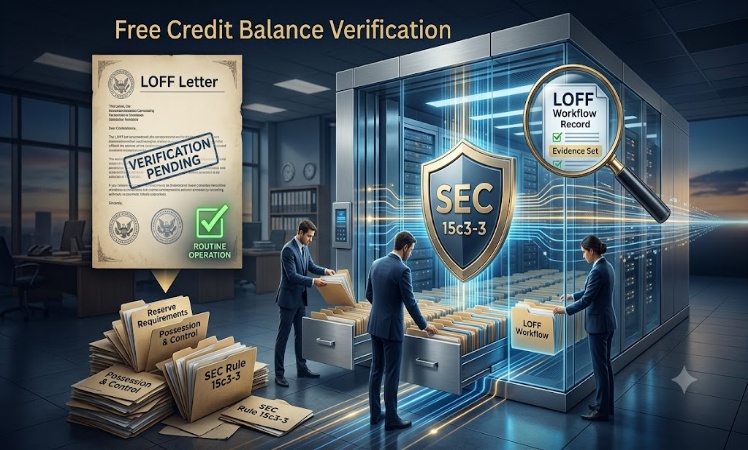
Every free credit balance verification has two sides and one record. The carrying broker needs the verification. The depositing broker needs the response. And when the request lands in the queue, the operations team needs to know exactly where that record lives, who touched it, and whether it can stand up to review.
That is the real test of SEC Rule 15c3-3. The rule is not only about whether the firm asked the question. It is about whether the firm can prove the verification happened, the response was captured, and the supervisory trail is intact. When that workflow lives in email, fax, and PDF folders, the answer is usually technically present but operationally buried.
Why the Letter Matters
Free credit balance verification sounds routine until the process has to be defended. Firms that carry customer accounts are expected to safeguard customer funds and securities, including the reserve and possession-or-control requirements under Rule 15c3-3. In practice, that makes the Letter of Free Funds (LOFF) workflow part of the firm's evidence set, not just an administrative task.
Manual workflows create a weak point at every handoff. A request can sit unopened in an inbox. A response can be saved to the wrong folder. A reviewer can approve it without a clean timestamp. None of that helps when an examiner asks for the full trail.
What Breaks First
Retrieval breaks first. A firm may know the request was sent and the answer came back, but if the record is spread across systems, producing it becomes a scavenger hunt. That is the moment routine work turns expensive.
Proof breaks second. An examiner does not want a story about how the team remembers handling the request. They want the request, the verification, the identity of the reviewer, and the retained record together in one place. If the workflow cannot answer those questions quickly, the control itself starts to look weak, even when the work was done.
Why Freefunds Verified Direct (FVD) Matters
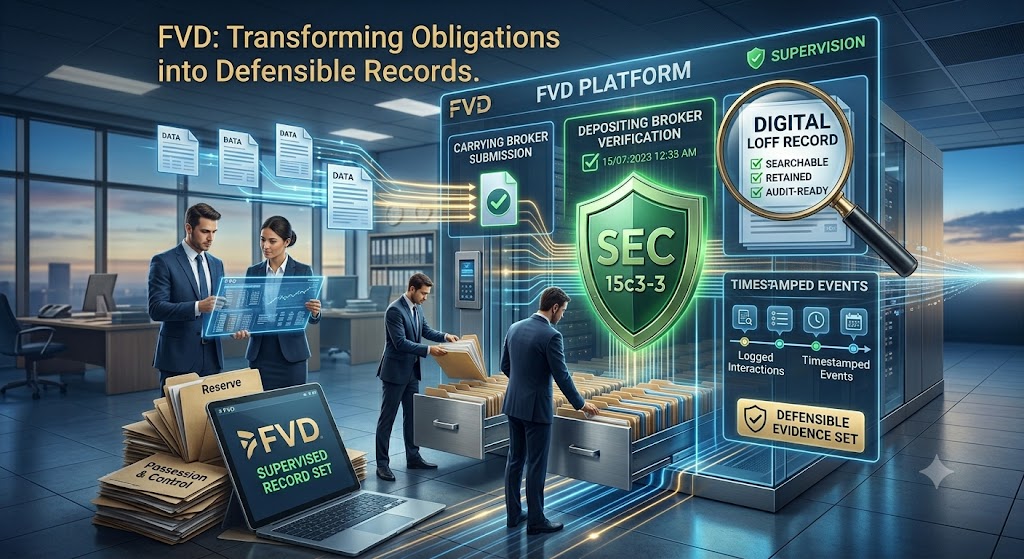
Loffa Interactive Group's FVD solution replaces the manual LOFF process with a secure, digital verification workflow. Carrying brokers submit free credit balance data electronically, depositing brokers verify it in the same platform, and every interaction is logged and timestamped. The result is an audit-ready record instead of a reconstruction project.
That is the real advantage. FVD does not simply move paper onto a screen. It turns a regulatory obligation into a supervised record set that is searchable, retained, and easier to defend. The workflow splits cleanly across the two parties: the executing broker originates the request through the FVD-S Send workflow, and the custodian answers it through the FVD-R Receive workflow, with both halves captured in one trail.
The Cost of Delay
A delayed or fragmented LOFF response costs the firm twice. First in operations time while the team hunts for the right documents. Then in management or legal time when the response has to be explained to an examiner. The more scattered the record, the more fragile the story becomes.
The fix is to capture the process as it happens. A contemporaneous workflow will always be stronger than an after-the-fact explanation assembled under deadline. The verification is only as good as the firm's ability to show it.
If your free credit balance verification still relies on spreadsheets, email, and manual follow-up, the place to start is the evidence trail. Contact Loffa Interactive Group to streamline the workflow, strengthen supervisory records, and meet SEC Rule 15c3-3 requirements with confidence.
Related reading: Friday Afternoon and the LOFFs Come Due and Automated Isn't Free. It's Unpriced..