How to Choose a Workflow Platform Your Examiners Will Actually Trust
Choosing a workflow platform is no longer just an IT decision. For broker-dealers, banks, and other financial services firms, it is a compliance and operational decision that can affect how well the firm performs under regulatory scrutiny. Managing directors and heads of operations need more than a tool that looks modern. They need a platform that can support control, auditability, retention, and supervision in a way that stands up to examiners, auditors, and internal risk teams.
Why This Decision Matters More Than Ever
As firms add more automation, third-party integrations, and digital workflows, the platform itself becomes part of the control environment. That means poor vendor selection can create long-term risk even if the software appears to solve an immediate process problem.
The questions are simple but important:
- Can the system produce clear evidence of what happened?
- Can it support the retention and access requirements of a regulated firm?
- Can it show that controls were working over time, not just on paper?
If the answer is uncertain, the platform may be fine for collaboration but not strong enough for regulated operations.
What Examiners Expect to See
Examiners and internal audit teams are looking for more than efficiency. They want evidence that the firm can supervise its workflows, protect records, and explain how decisions were made.
A trustworthy platform should support:
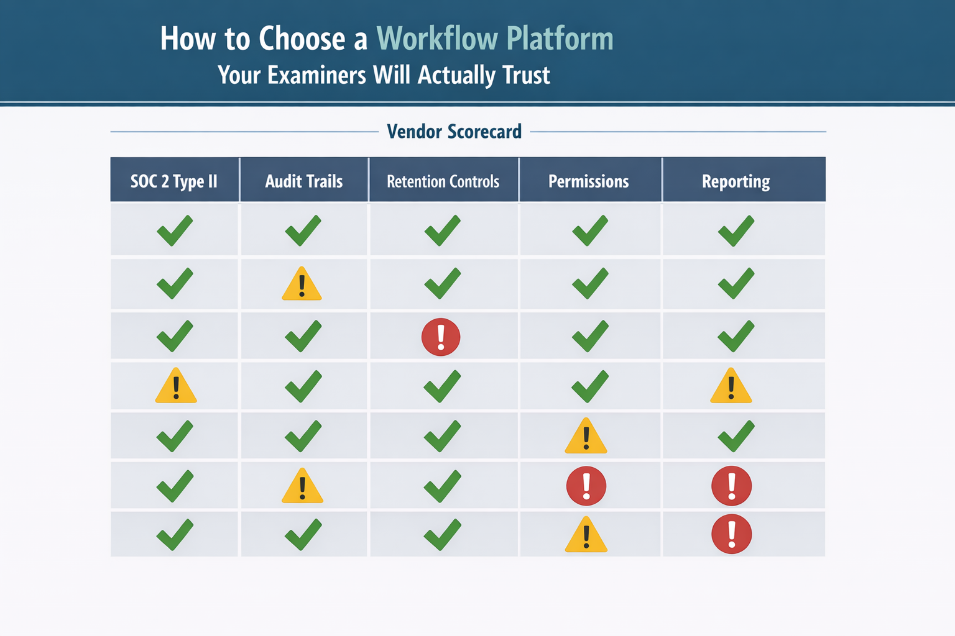
- Audit trails that show who did what, when, and why.
- Role-based access so only the right people can see or change sensitive information.
- Retention controls that align with books-and-records obligations.
- Exception handling that is visible and documented.
- Reporting that allows the firm to reconstruct activity quickly during an exam or internal review.
If a system cannot do those things without heavy manual work, then it may shift risk instead of reducing it.
The Non-Negotiables in Vendor Selection
When leadership evaluates a workflow platform, there are a few requirements that should not be optional.
1. Independent control validation
A current SOC 2 Type II report is one of the strongest indicators that a vendor has operated controls over time, not just documented them once. For regulated firms, that kind of third-party validation can make vendor due diligence much easier to complete.
2. Strong data governance
The vendor should be able to explain how data is stored, retained, retrieved, and protected. If the answer is vague, the firm is taking on hidden operational risk.
3. Real workflow structure
A real workflow platform should have routed approvals, status tracking, escalation rules, and exception management. Folders and shared links are not enough for critical financial processes.
4. Evidence-ready reporting
The platform should make it easy to produce evidence for audits, exams, and internal reviews without recreating the process manually.
Questions to Ask Every Vendor
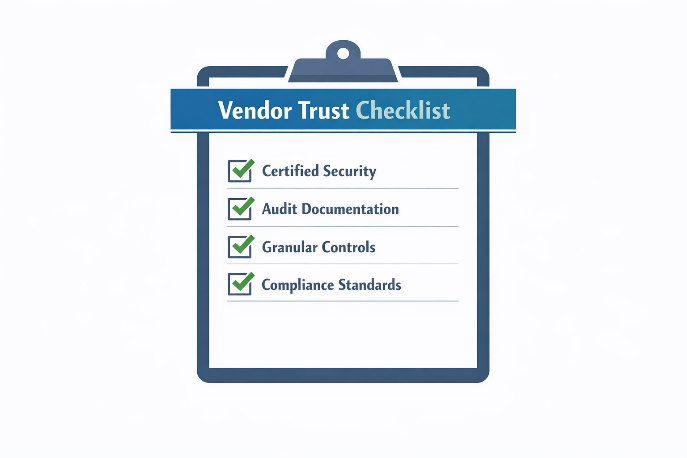
Here is a practical RFP checklist for leadership and vendor risk teams:
- Do you provide a current SOC 2 Type II report?
- Which trust service criteria are in scope?
- How do you handle retention and deletion for regulated records?
- Can we export complete audit trails on demand?
- How are permissions managed and reviewed?
- How do you support exception handling and supervisory review?
- What happens to our data if we terminate the relationship?
- How quickly can we produce evidence for an exam or audit request?
These are not theoretical questions. They go straight to the heart of operational resilience and exam readiness.
How to Think About Platform Fit
The best workflow platform is not always the one with the most features. It is the one that aligns with the firm's control environment, supervision needs, and regulatory obligations.
A good way to think about it is this: if the platform disappeared tomorrow, could the firm still prove what happened in its workflows? If the answer is no, then the platform is not just a convenience—it is a critical part of the compliance architecture.
That is why firms need to evaluate workflow vendors the same way they evaluate other regulated infrastructure, with evidence, controls, and audit readiness in mind.
When you are ready to choose a platform that can support regulated operations with real control and accountability, Loffa Interactive Group is the firm to contact for help building workflow systems examiners can trust.